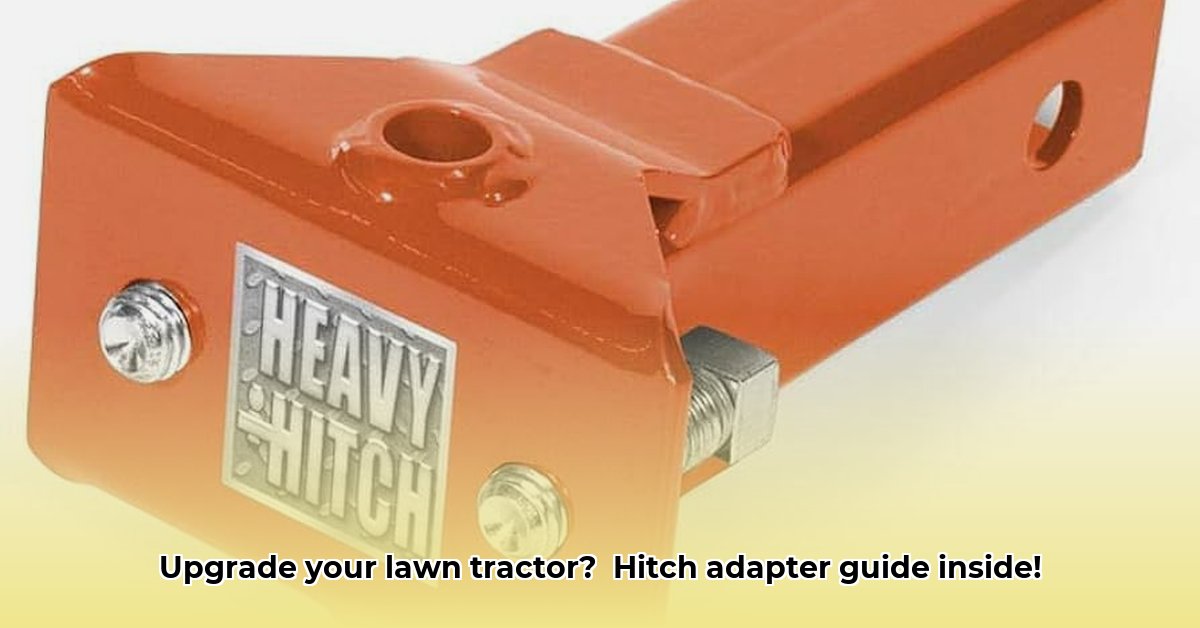
Adding attachments to your lawn tractor significantly boosts its versatility, but choosing the right hitch adapter is crucial. This comprehensive guide explains hitch adapters, helps you select the appropriate one, details safe installation, and provides troubleshooting tips. Let's get started! For more on snow blower compatibility, check out this helpful resource: snow blower info.
Understanding Lawn Tractor Hitch Adapters
A hitch adapter is a crucial connector, bridging the gap between your lawn tractor's hitch system and various attachments like trailers, snow plows, or spreaders. Its purpose is straightforward: to create a secure and compatible connection. However, the market offers a variety of adapters, each with specific capabilities. Understanding these differences is vital for safe and effective use.
Three key factors differentiate hitch adapters:
- Weight Capacity: This indicates the maximum weight (in pounds) an adapter can safely handle. Always choose an adapter with a capacity exceeding the combined weight of your attachment and its contents. Exceeding this limit risks damage to your tractor, adapter, or even injury.
- Hitch Pin Size: This refers to the diameter (in inches) of the pin securing the adapter to your tractor. Using an incorrect size is unsafe and can lead to adapter failure. Ensure compatibility with your tractor’s hitch.
- Receiver Type: Lawn tractors utilize different hitch receiver types (e.g., Category 0, Category 1). Category 1 is generally for heavier-duty tasks. Check your tractor's manual to confirm the correct receiver type. Mismatched adapters and receivers are dangerous and will not work.
Ignoring these specifications can lead to serious consequences. Always consult your tractor’s manual and the adapter’s specifications before purchase and installation.
Choosing the Right Hitch Adapter
Selecting the perfect hitch adapter requires careful consideration of several factors. Failure to do so can lead to incompatibility and potential safety hazards. The process involves several steps:
- Identify Your Tractor Model: Consult your owner’s manual for precise hitch specifications, including receiver type and weight limits.
- Determine Your Needs: What attachments will you use? A heavy-duty snow plow requires a much more robust adapter than a small spreader. Estimate the weight of the combined attachment and its contents.
- Set a Realistic Budget: Higher weight capacities and robust materials generally mean higher prices. Prioritize safety and durability within your budget.
The following table provides a general guideline for common adapter types. However, specific specifications may vary significantly between manufacturers. Always consult the manufacturer's documentation for precise details.
| Adapter Type | Typical Weight Capacity (lbs) | Typical Hitch Pin Size (in) | Receiver Type | Typical Applications |
|---|---|---|---|---|
| Light-Duty | 100-500 | 5/8 - 3/4 | Category 0/1 | Small spreaders, aerators, light trailers |
| Medium-Duty | 500-1000 | 7/8 - 1 | Category 1 | Larger spreaders, dethatchers, heavier trailers |
| Heavy-Duty | 1000+ | 1 - 1 1/4 | Category 1 | Snow plows, tillers, substantial hauling needs |
Do you have any questions about which adapter will best suit your specific needs and budget?
Installing and Using a Hitch Adapter: A Step-by-Step Guide
Proper installation is vital for safety and performance. Always follow the specific instructions supplied with your hitch adapter. This section provides a general outline.
- Preparation: Park your tractor on a level, stable surface, and engage the parking brake. Always wear appropriate safety gear, including gloves and safety glasses.
- Alignment: Carefully align the hitch adapter with your tractor's receiver, ensuring a snug fit.
- Securing the Hitch Pin: Insert the correct size hitch pin and secure it firmly. A loose pin is a major safety hazard.
- Attachment Connection: Attach your implement to the adapter, following its specific instructions for secure connection.
- Testing: Before operation, gently test the connection by pulling lightly on the attachment.
- Operation: Operate your tractor cautiously, maintaining awareness of the attached implement’s size and weight.
Following these straightforward steps will ensure a safe and effective installation process.
Troubleshooting and Maintenance: Extending the Life of Your Hitch Adapter
Regular maintenance prolongs the life and safety of your hitch adapter.
- Regular Inspections: Regularly check the hitch pin for tightness and the entire adapter for signs of wear, damage, or rust.
- Cleaning: Clean the adapter after each use to remove debris and prevent corrosion.
- Lubrication: Lubricate moving parts to ensure smooth operation and prevent rust.
- Bolt Tightening: Periodically check and tighten all bolts to maintain the adapter's structural integrity.
- Repair or Replacement: Replace any damaged or worn parts immediately. Continued use of a damaged adapter is highly dangerous.
"Regular maintenance is crucial for preventing unexpected failures and ensuring the long-term reliability of your hitch adapter," advises John Miller, Certified Equipment Technician at Miller's Tractor Repair.
By following these simple maintenance steps, you’ll ensure your hitch adapter remains a valuable asset for years to come. Remember, prioritizing safety and proper maintenance will guarantee optimal performance and longevity of your hitch adapter and the connected attachments.